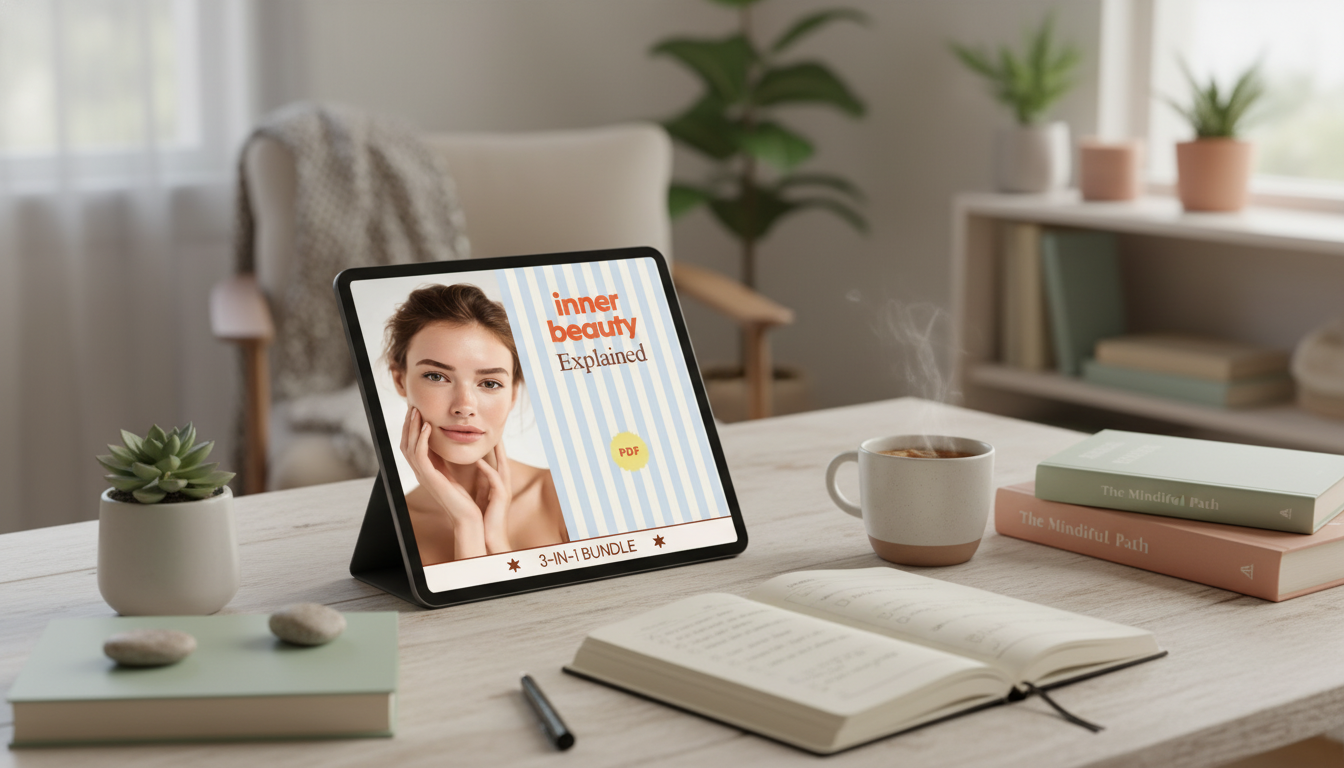
Inner beauty is the steady quality that shapes how someone treats themselves and others—especially when no one is watching. It shows up as character, self-respect, empathy, integrity, and emotional balance. A practical way to build it is to mix understanding (so you know what you’re aiming for), reinforcement (so you remember it when stress hits), and structure (so it becomes consistent). That’s why a bundle format works well for real life: clear guides for habits, short quotes for daily resets, and a checklist that turns good intentions into repeatable practice.
Inner beauty isn’t a vague “good vibe.” It’s expressed through values and behavior—kindness, honesty, patience, courage, humility, and respect—especially in small moments that don’t earn applause.
It also isn’t “always positive.” Real inner beauty includes accountability, clear boundaries, and the willingness to repair after mistakes. That means telling the truth without cruelty, saying no without guilt, and returning to alignment when you get pulled off course.
Most people experience inner beauty through micro-actions: listening without preparing a rebuttal, handling conflict calmly, speaking truthfully, and treating people fairly. The encouraging part is that these can be strengthened like skills through reflection, repetition, and supportive prompts—much like building endurance one short workout at a time.
Many people value empathy and integrity but still struggle to show them consistently. A few common reasons:
A structured routine helps because it removes guesswork. Prompts, reminders, and small steps reduce mental load—so you can access your best self more often, not just on “good days.”
If you want a ready-to-use structure, Inner Beauty Explained | 3-in-1 Inner Beauty Bundle: Guides, Quotes & Checklist is designed to be both practical and lightweight—something you can actually return to daily.
A simple way to use the bundle is to pick one theme per week (patience, integrity, compassion) and pair it with one quote plus three checklist items. Progress looks like consistency, not perfection: fewer spirals, faster repair, calmer decisions, and a stronger sense of self-trust.
| Component | Purpose | How to Use in 10 Minutes |
|---|---|---|
| Guides | Build understanding and skills | Read 1 short section and choose 1 action to practice today |
| Quotes | Reinforce mindset quickly | Pick 1 quote and write a 2-sentence reflection |
| Checklist | Turn values into repeatable habits | Check off 3 items and note one win + one adjustment |
Inner beauty grows when your inner life and outer behavior match more often. These daily practices are small, but they compound.
Replace harsh self-talk with the tone you’d use for a close friend: supportive realism over denial. This isn’t letting yourself off the hook; it’s reducing shame so you can act with clarity. (If you want a mindset boost, the American Psychological Association’s notes on gratitude are a helpful reminder that attention can be trained toward what’s steady and good.)
Choose one small action that matches your values: follow through, apologize, admit you don’t know, or tell the truth gently. Integrity isn’t grand gestures—it’s consistency.
Ask one clarifying question before responding, then reflect back what you heard. This simple pause reduces defensiveness and helps others feel safe with you.
Say “yes” slowly and “no” clearly. Boundaries protect kindness from becoming resentment, which makes your generosity sustainable.
After conflict, focus on impact, ownership, and one specific next step. Skip vague promises and aim for concrete repair (a changed plan, a follow-up, or a clearer agreement).
If stress is what knocks you off course most often, pairing mindset work with a body-based recovery routine can help. The Yoga Techniques for Full Relaxation and Recovery: 4-in-1 Digital Download Bundle is a complementary option for building calm and reducing reactivity—so your values are easier to access in real time.
It can be developed. Inner beauty is largely made of learnable skills—self-awareness, empathy, self-compassion, and boundary-setting—that improve through repetition, reflection, and consistent practice.
Small shifts can show up in days (less reactivity or quicker recovery). Clearer patterns often emerge in 2–4 weeks with a checklist, while deeper trust and steadier confidence typically build over 6–12 weeks of consistent practice.
Use them as prompts, not rules. Choose neutral wording, tie each quote to one concrete action, and keep the checklist minimal—three items a day is enough to build momentum without feeling performative.







Leave a comment