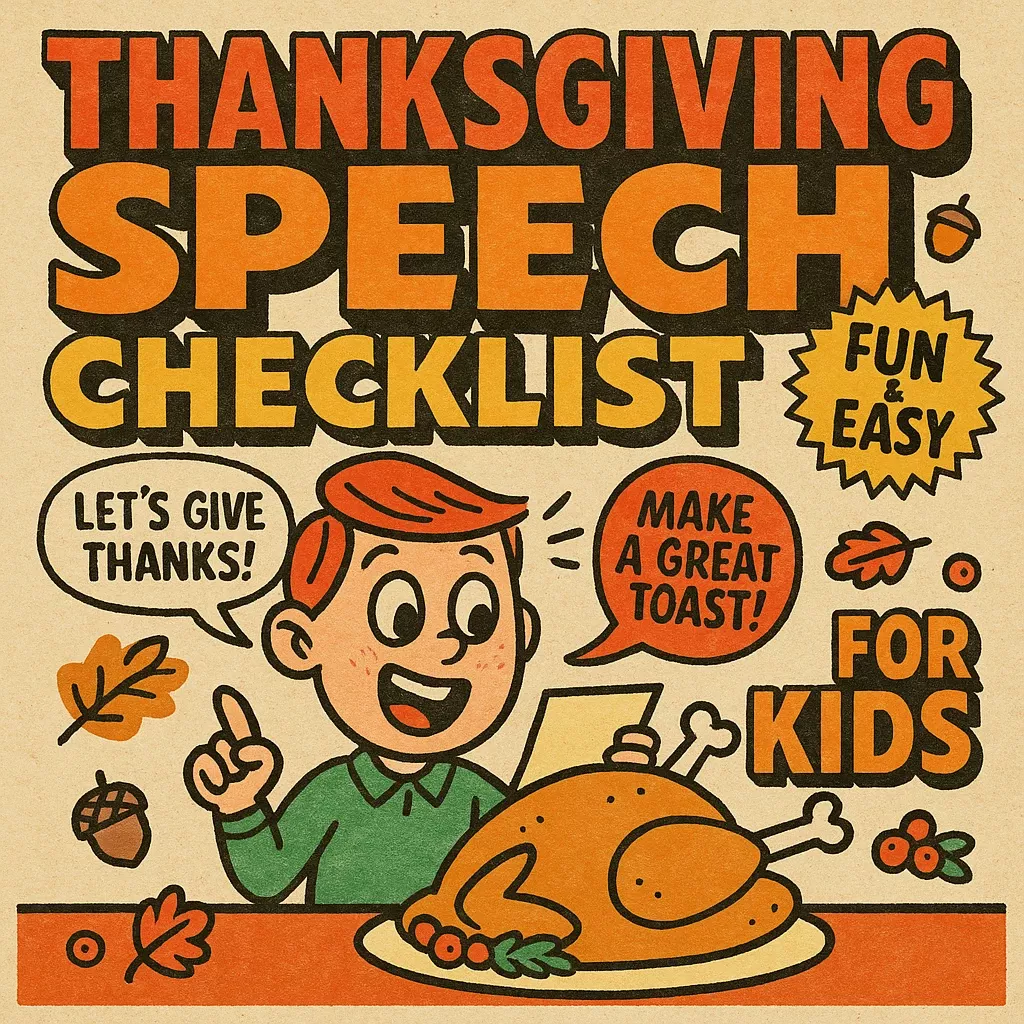
A short Thanksgiving speech is a simple way for kids to practice gratitude, confidence, and clear speaking. With the right structure, it can feel more like sharing a happy thought than “performing.” Below is a quick, kid-friendly plan—from choosing a theme to practicing with a calm voice—plus a printable-style checklist you can copy, print, and check off.
The best kid speeches sound like the kid who is saying them. Keep the goal simple: one clear message, said kindly, in a time that feels comfortable.
Gratitude activities can help kids notice positives more easily, and research often links gratitude with well-being. For extra background, see Harvard Health Publishing on giving thanks.
If your child gets stuck, themes make choosing a topic fast. Pick one and fill in the blanks out loud before writing anything down.
For more kid-friendly gratitude ideas, PBS Parents often shares simple family activities you can do before the holiday.
This simple formula keeps the speech focused: beginning, middle, end. Short is strong.
Choose just one: one person, one memory, or one thing. (Example: “my grandma,” “our football game,” or “my teacher.”)
Use a greeting + one sentence about Thanksgiving. Example: “Happy Thanksgiving, everyone. Today is a day to notice what we’re grateful for.”
Keep each sentence easy to say out loud. Add a specific example: “I’m thankful for my brother because he helps me with my homework when I’m frustrated.”
This can be a short story, a compliment, or a funny-but-kind moment. The best details are small and true: a shared joke, a helpful habit, a favorite smell from the kitchen.
End with gratitude + goodbye: “Thank you for listening, and Happy Thanksgiving!”
Tip: If writing feels hard, have your child speak the speech first. Then write down what they said (or record it and copy the best lines).
This checklist works for a family dinner, a classroom share, a school assembly, or even a short video message to relatives.
| Part | Checklist item | Done |
|---|---|---|
| Plan | Picked one main topic (person, memory, or thing) | ☐ |
| Plan | Know where it will be shared (home, class, stage, video) | ☐ |
| Write | Opener: greeting + one sentence about Thanksgiving | ☐ |
| Write | Body: 2–3 gratitude sentences with one specific detail | ☐ |
| Write | Closing: thank you + “Happy Thanksgiving” (or similar) | ☐ |
| Edit | Removed hard words or very long sentences | ☐ |
| Practice | Practiced 3 times (slow, normal, then “performance” speed) | ☐ |
| Present | Smiled, looked up, and paused at the end | ☐ |
If you want a ready-to-use version with a clean layout you can print and reuse, see Thanksgiving Speech Checklist for Kids (printable guide).
For general communication tips, the American Speech-Language-Hearing Association (ASHA) is a helpful, reputable resource for families.
“Happy Thanksgiving! Today I’m thankful for ___. It makes me feel ___. Thank you for listening.”
“Happy Thanksgiving. I’m thankful for ___. One time, ___. That’s why I appreciate ___. Happy Thanksgiving!”
“Happy Thanksgiving! I’m thankful for __, __, and __. I’m especially thankful for ___ because ___. Thank you!”
For families and classrooms, a print-and-go page can reduce last-minute stress before a dinner share, a class circle time, or a school event. Pairing a short speech moment with an activity can also keep the mood light—see Creative Thanksgiving games and challenges for family gatherings if you want easy, family-friendly options.
Preschoolers often do best with about 20–40 seconds, elementary kids with 45–90 seconds, and older kids with 1–2 minutes. When in doubt, shorter usually sounds more confident and is easier to practice.
Start with a small audience (one parent, then two people), or let them record the speech as practice before sharing it live. A slow breath, a few marked pauses, and permission to read from the page can make it feel safe.
Yes. Use large print, short lines, and practice looking up after each sentence. A finger or a light highlight can help them keep their place without rushing.






Leave a comment