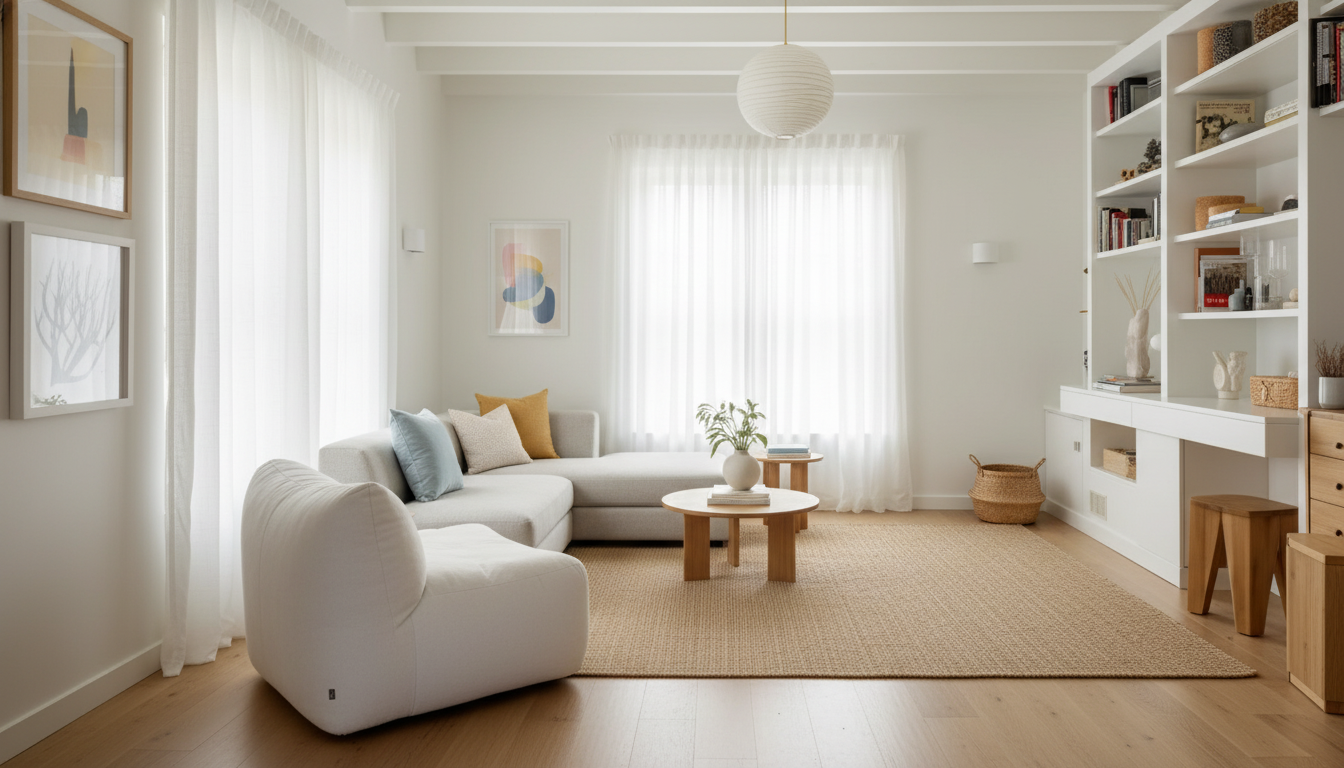
Small rooms can feel tight when furniture blocks pathways, lighting creates shadows, or décor adds visual noise. A few targeted changes—layout, light, and styling—can make the same square footage feel calmer, brighter, and more proportionate. The Making Small Rooms Feel Open and Balanced: 3-in-1 Bundle for Expanding Small Spaces is designed to help create that open, balanced look with coordinated guidance and tools aimed at maximizing perceived space.
“Open” doesn’t mean empty—it means the room reads clearly at a glance, with fewer visual interruptions and better flow. “Balanced” means no single corner feels overloaded or heavy compared to the rest of the room.
If you’re looking for inspiration on what tends to work in tight layouts, sources like Architectural Digest and Houzz highlight a consistent theme: simplify, unify, and keep the eye moving through the room.
Most small-space frustrations come from solving problems in isolation—buying storage before fixing layout, adding décor before tackling lighting, or picking pieces that compete instead of coordinating. The 3-in-1 bundle is built as a coordinated set so layout, styling, and finishing touches reinforce each other.
| Change | Why it helps | Best for |
|---|---|---|
| Float key furniture slightly away from walls (when possible) | Improves circulation and creates cleaner sightlines | Living rooms, bedrooms |
| Use one cohesive neutral base with small accent pops | Reduces visual breaks that shrink a space | Any room |
| Add a mirror opposite or near a light source | Boosts brightness and perceived depth | Hallways, bedrooms, living rooms |
| Choose fewer, larger décor pieces | Less visual clutter than many small items | Shelves, walls, tabletops |
| Keep floors more visible (legs, wall-mounted, or slimmer pieces) | Creates a lighter, less crowded footprint | Small living rooms, offices |
Lighting is a common “hidden lever.” Even one extra lamp can make a room feel more evenly lit and less compressed—especially when it reduces shadows in corners. For a simple overview of layering ambient, task, and accent lighting, see the American Lighting Association’s lighting basics.
For multipurpose rooms, pairing a space plan with stress-reducing routines can help the area feel more livable day-to-day. If you’re building a calmer “reset corner” in a tight apartment, the Yoga Techniques for Full Relaxation and Recovery: 4-in-1 Digital Download Bundle can complement a simplified room setup with guided recovery and relaxation practices.
When hosting in a smaller home, the same “less clutter, clearer zones” rules apply—especially around seating and snack areas. If you like structured, low-prep activities that don’t require extra décor or bulky supplies, Creative Games and Challenges for Thanksgiving is a simple add-on for gatherings in tighter living rooms or dining nooks.
Improve lighting to reduce shadows, simplify the color palette, and clear pathways so movement feels effortless. Reducing visual clutter—using fewer, larger pieces and keeping floors and surfaces more visible—also increases the sense of space quickly.
Yes—mirrors reflect light and extend sightlines, which can make a room feel brighter and deeper. For best results, place a mirror near or opposite a window or lamp and avoid positioning it where it reflects clutter.
Balance visual weight by adding lighter elements on the opposite side—such as a floor lamp, art, or a slimmer accent chair—rather than another bulky item. Keep heights varied and distribute storage so one area doesn’t become the “heavy corner.”






Leave a comment