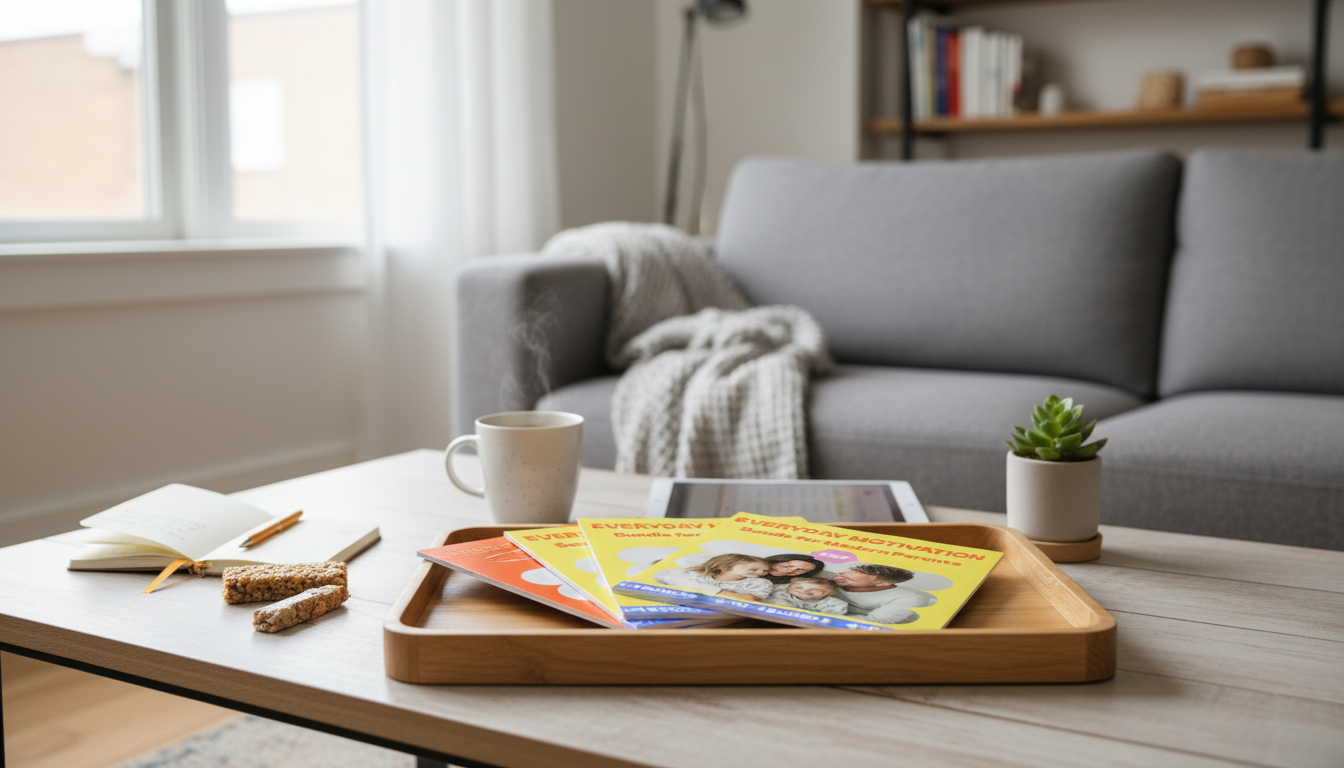
Parenting can feel like a nonstop loop of responsibilities, emotions, and time pressure. A practical bundle of short, usable guides can help turn scattered good intentions into repeatable habits—so calmer mornings, steadier patience, and more supportive connection become part of everyday life rather than a rare “good day.”
If you want tools that work in real life (think: 5–15 minutes, not a full overhaul), the Everyday Motivation Bundle for Modern Parents: 4 Essential Guides to Stay Zen, Thrive & Support is built around small practices that help you regulate stress, create workable routines, and reconnect after tough moments—without demanding perfection.
Stress is not “just in your head”—it can affect the body and your ability to respond with patience. For a helpful overview of how stress shows up physically, the American Psychological Association (APA) explains common stress effects on the body, which can make it easier to notice your own early warning signs.
It’s especially useful during “compressed” seasons—back-to-school weeks, sleep regressions, work deadlines, or any time you feel like you’re reacting more than leading.
The strength of a bundle like this is that it doesn’t treat parenting challenges as one single problem. Most hard days include a mix of stress, logistics, and relationship friction—so having four focused guides helps you address the full picture:
If you want an additional body-based recovery option to pair with your parenting tools, consider the Yoga Techniques for Full Relaxation and Recovery: 4-in-1 Digital Download Bundle as a simple way to downshift your nervous system—especially after long days.
| Moment | Common challenge | Quick practice | Benefit to the family |
|---|---|---|---|
| Morning rush | Irritability and time pressure | Choose one “non-negotiable calm cue” (slow exhale before responding) | Fewer escalations; clearer directions |
| After school/work | Everyone is depleted | 5-minute transition ritual (snack + check-in question) | More connection; fewer power struggles |
| Homework/chores | Resistance and nagging | Set a short “start line” (2 minutes to begin, then reassess) | Higher follow-through with less conflict |
| Bedtime | Overstimulation and negotiations | Same 3-step wind-down sequence (dim lights, story, gratitude prompt) | Easier settling; more predictable nights |
Mindfulness doesn’t have to be long or silent to be effective. The National Center for Complementary and Integrative Health (NCCIH) overview of mindfulness is a helpful reminder that brief, consistent practices can support stress management over time.
For parents of toddlers and preschoolers who want additional evidence-informed tips on guidance and behavior support, the CDC’s Essentials for Parenting is a strong reference.
If you’re also looking for family-friendly ways to create connection during holidays (when schedules and patience get tested), the Creative Games and Challenges for Thanksgiving can be a fun add-on for easy together-time that doesn’t require a lot of prep.
Yes. Use one small practice at a time and lean on quick-reference pages you can revisit in the moment; even a 5–10 minute routine (like a reset breath plus a single prompt) can create noticeable change over a week.
Yes. Choose a couple of shared phrases, agree on 1–2 consistent house rules, and do a short weekly check-in to stay aligned while still leaving room for each parent’s personal style.
That’s when “minimum viable habits” help most. Use a pre-planned restart rule (missed days don’t mean failure), and prioritize regulation and recovery first—then rebuild routines once the week stabilizes.






Leave a comment