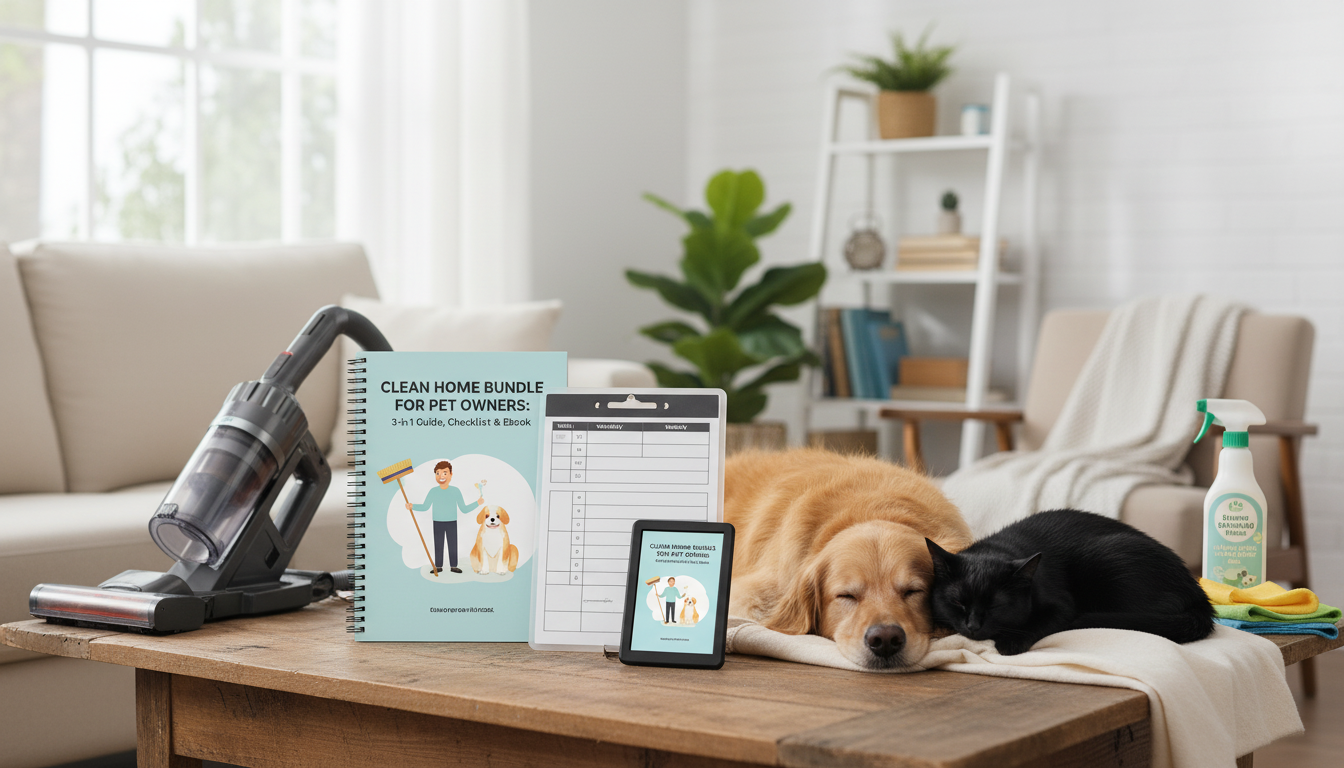
A tidy home with pets is less about constant deep-cleaning and more about predictable routines that fit real life. A clear plan, a repeatable checklist, and a few pet-safe habits can reduce shedding buildup, odors, tracked-in dirt, and “surprise” messes without turning cleaning into a full-time job.
Pet-related mess has a way of reappearing fast because it’s created by multiple small sources throughout the day. Once you name the sources, you can target the few actions that prevent the biggest buildup.
A simple system beats a “clean when you can” approach. The goal is to remove daily friction: fewer decisions, fewer missed steps, and fewer weekend marathons.
| Bundle part | Best for | When to use it |
|---|---|---|
| Quick-start guide | Setting up routines and supplies | Day 1 and whenever the routine slips |
| Cleaning checklist | Daily/weekly consistency | Ongoing |
| eBook reference | Troubleshooting odors, stains, and shedding | As needed (especially during seasonal changes) |
This “daily reset” is the secret weapon: it keeps fur and grime from reaching the point where everything feels dirty at once. Pick a consistent time (after breakfast, right after dinner, or before bed) and keep the tools within reach.
Weekly maintenance is where “fresh” starts to feel normal. The best approach is a light rotation: small blocks of time that keep floors, fabrics, and odor hotspots from building up.
| Day | Focus area | Top tasks (15–30 minutes) |
|---|---|---|
| Mon | Floors | Vacuum high-traffic paths; sweep corners; mop spot areas |
| Tue | Fabrics | Wash pet bedding/blankets; vacuum couch and chairs |
| Wed | Bathrooms/Litter | Deep clean litter area; sanitize surrounding floor; replace liners if used |
| Thu | Kitchen | Clean bowls/mats; wipe cabinets near feeding station; empty crumbs from corners |
| Fri | Odor control | Spot-clean rugs; refresh washable covers; air out rooms |
| Sat | Grooming + gear | Brush pets; clean brushes; restock wipes/bags; tidy leash/toy bin |
| Sun | Reset | Quick whole-home pickup; check for stains or accidents; plan next week |
When time is tight, clean where pets live most. These targets make the biggest difference in how a home looks and smells day to day.
For additional guidance on cleaning and disinfecting basics, review the CDC’s cleaning and disinfecting recommendations. To reduce accidental exposure risks at home, the ASPCA’s household hazards resource is a helpful reference. If you’re looking for product safety signals, the EPA Safer Choice program explains ingredient and labeling standards.
Weekly works well for heavy shedders, strong odors, or allergy seasons; every 1–2 weeks is usually fine for lighter use. Wash sooner after accidents, muddy days, or any flea/allergy concerns.
Do a daily 10-minute routine: quick vacuum the main pet paths, lint-roll upholstery, and brush regularly. Target corners, baseboards, and under furniture where hair tends to gather.
Remove the source by washing fabrics, cleaning litter/potty areas, and treating stains promptly, then ventilate and dry thoroughly. Use pet-appropriate products exactly as directed on the label to avoid buildup and residue.






Leave a comment