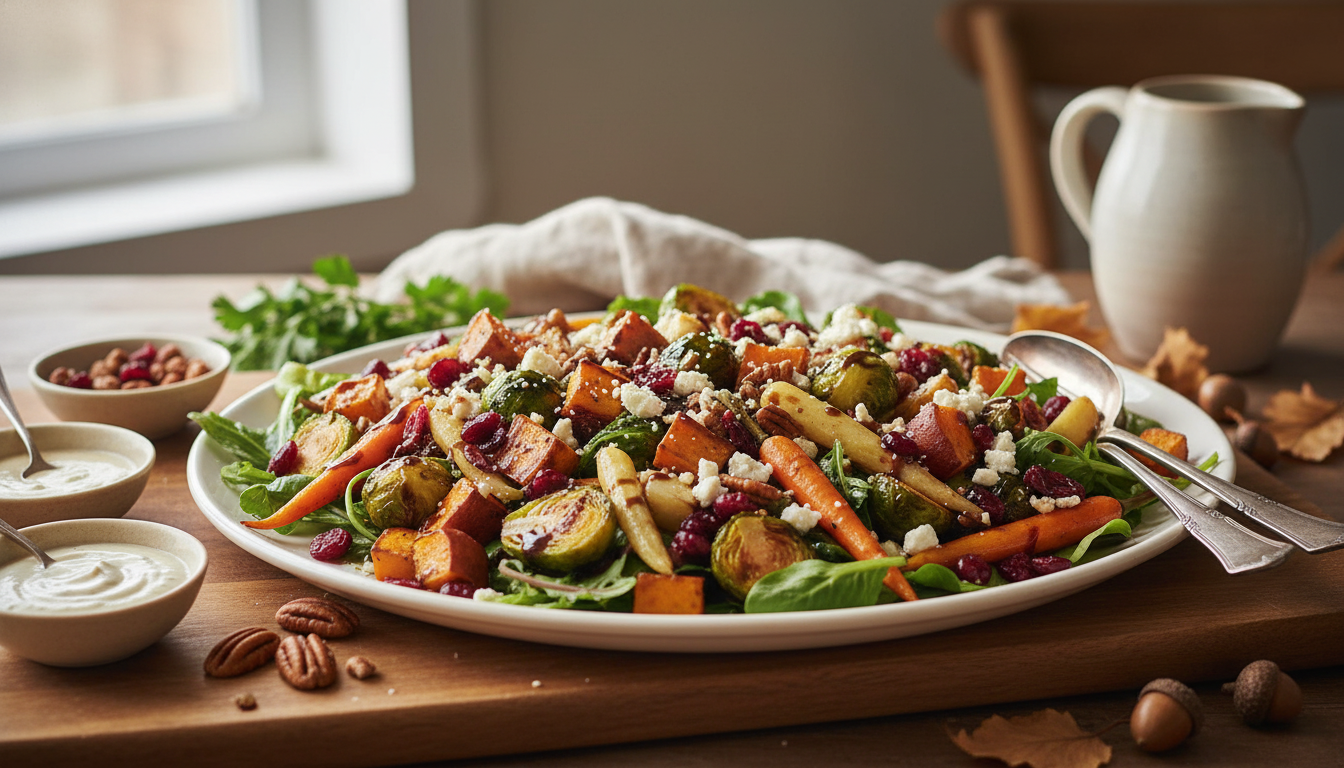
Thanksgiving salads can be more than a quick green side. With roasted vegetables as the centerpiece, a salad becomes warm, seasonal, and deeply flavorful—balancing rich mains with brightness, crunch, and color. Below are the building blocks (vegetables, greens, add-ins, and dressings), plus a simple plan for roasting and assembling a salad that holds up beautifully on a holiday table.
Roasted vegetables bring caramelized sweetness and savory depth—exactly what you want next to buttery mashed potatoes, stuffing, and gravy. A splash of acid (lemon, orange, vinegar) keeps the whole meal feeling lively, not heavy.
They also give you a reliable texture mix: crisp edges from roasting, creamy bites from squash or cheese, and crunch from nuts or seeds. And because fall produce is so flexible, you can swap based on what looks best at the store—roots, brassicas, and winter squash all shine.
Finally, roasted-veg salads work in multiple serving styles: warm (right after roasting), room-temperature (great for buffet timing), or as a composed “salad bar” platter so guests can customize.
Butternut squash, sweet potato, carrots, and beets roast into a naturally sweet, silky centerpiece. Pair them with tart fruit (pomegranate, apple), tangy cheese (goat cheese, feta), or a mustard-forward dressing to keep flavors balanced.
Brussels sprouts, cauliflower, broccoli, and mushrooms deliver roasted, nutty flavors that love parmesan, toasted nuts, and balsamic. These are especially good when your menu already leans sweet (cranberry sauce, sweet potatoes, pie).
Red onion, shallots, and leeks add aroma and depth. They also help bridge the gap between sweet vegetables and bitter greens like radicchio.
Try rosemary with squash, thyme with mushrooms, smoked paprika with cauliflower, or cumin with carrots. If a spice tends to scorch, add it partway through roasting rather than at the beginning.
Watery vegetables roast best on their own pan. And no matter what you’re roasting, leave space—overcrowding causes steaming, which steals those crisp, browned edges.
For the best browning, preheat your oven fully and (if you can) preheat the sheet pan too. Cut vegetables into uniform pieces so they finish together, then coat lightly with oil and salt. If you’d like a quick refresher on technique, Serious Eats has a helpful primer on roasting vegetables: The Food Lab guide to roasting vegetables.
After roasting, finish smart: a final splash of lemon or vinegar “wakes up” flavors without needing extra salt or sugar. For oil choices in dressings, Harvard’s overview of healthier fats is a practical reference: Healthy Oils.
| Vegetable | Cut | Oven temp | Approx. time | Best finishing touch |
|---|---|---|---|---|
| Butternut squash | 3/4-inch cubes | 425°F / 220°C | 22–30 min | Maple + cider vinegar |
| Sweet potato | 3/4-inch cubes | 425°F / 220°C | 22–32 min | Lime + chili flakes |
| Carrots | halves or thick coins | 425°F / 220°C | 18–28 min | Honey + lemon |
| Beets | 1-inch cubes (covered first) | 400°F / 205°C | 35–55 min | Orange + balsamic |
| Brussels sprouts | halved | 425°F / 220°C | 18–25 min | Dijon + apple cider |
| Cauliflower | small florets | 450°F / 232°C | 18–25 min | Tahini + lemon |
Choose greens that can handle a little warmth and dressing: kale, arugula, radicchio, shredded cabbage, or a sturdy spring mix. If you want the salad to eat like a full side dish (not just “something green”), add a scoop of grains or legumes—farro, quinoa, wild rice, lentils, or chickpeas.
Then layer in contrast:
For a “harvest” look, keep components visible on a wide platter instead of tossing everything together until it turns uniform.
For food safety, refrigerate leftovers within 2 hours and reheat hot foods thoroughly if serving warm. The USDA’s guidance is a solid reference: Leftovers and Food Safety.
If you want a reliable, repeatable approach to Thanksgiving salads—pairings, flavor direction, and assembly that feels “host-ready”—the Harvest on a Plate: Mastering Thanksgiving Salads with Roasted Vegetables (digital guide) is designed to make roasted veggies the star without turning your prep into a juggling act.
For a calmer holiday kitchen overall, you may also like the Positive Attitude Starter Pack (3-in-1 Digital Bundle)—a quick reset for busy hosting weeks—or the Peaceful Plates System for Picky Phases if you’re planning a table with kids who prefer familiar textures and flavors.
Yes. Roast them 1–2 days ahead, cool completely, and refrigerate in an airtight container; let them come to room temperature (or rewarm briefly) before assembling, and keep dressing and crunchy toppings separate until serving.
Use sturdy greens, cool roasted vegetables before combining, and dress lightly (or serve dressing on the side). Add nuts, seeds, and croutons at the very end so they stay crisp.
Kale, arugula, radicchio, shredded cabbage, and hearty mixes hold up well. Delicate lettuces wilt quickly unless the vegetables cool slightly first.





Leave a comment