
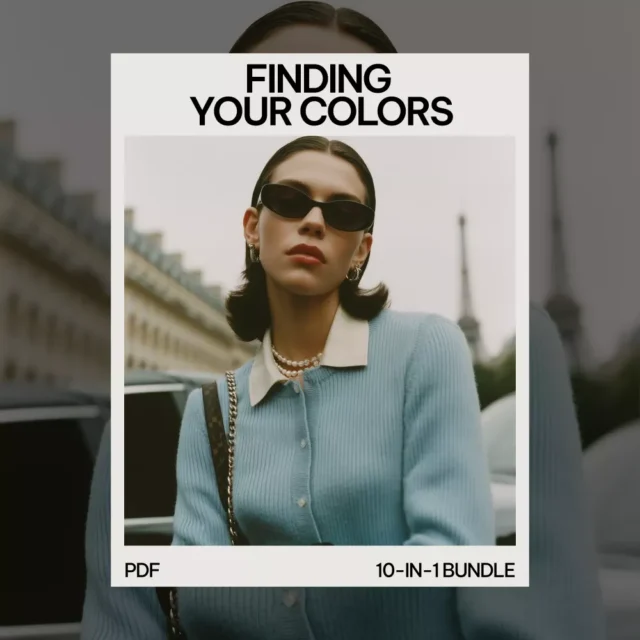
Color can make outfits look polished, skin look brighter, and shopping feel simpler—but only when the shades actually work with your natural coloring. The Finding Your Colors Step by Step Toolkit is built for beginners who want a clear, repeatable process using guides, eBooks, and checklists so outfit choices stop feeling like guesswork and start feeling consistent.
When undertone, depth, softness/brightness, and contrast are in sync, the effect is noticeable—even with simple basics.
If you’ve ever tried a “pretty” color and wondered why you looked tired, it’s usually not the color itself—it’s the mismatch in undertone, value (light/deep), or chroma (soft/bright). For a helpful primer on undertones and tone basics, the American Academy of Dermatology Association is a reliable starting point.
A beginner-friendly system works best when it combines learning with action. This bundle is organized to help you identify what flatters and then apply it in your closet, your shopping cart, and your daily outfit formulas.
| Toolkit piece | Best time to use it | Outcome |
|---|---|---|
| Quick-start guide | Before you begin (30–60 minutes) | Sets up lighting, comparison steps, and a simple decision path |
| Deep-dive eBooks | When results feel unclear | Explains why certain colors look off and how to correct course |
| Checklists | Closet edits and shopping trips | Turns preferences into consistent yes/no choices |
| Palette references | Daily outfit building | Speeds up coordination for tops, scarves, jewelry, and makeup shades |
If you want a method you can repeat (and refine), use this flow. It’s designed to reduce confusion by focusing on comparisons instead of one-off “do I like this color?” judgments.
If you enjoy understanding the “why” behind what you’re seeing, a quick overview of basic color concepts can also help you describe results more clearly. Britannica’s color theory overview provides useful background terminology.
The fastest way to feel the benefits is to apply your results where they matter most: near your face, and in the colors you repeat weekly.
For a guided bundle that pairs learning with ready-to-use decision tools, keep your palette work in one place with the Finding Your Colors Step by Step Toolkit – 10-in-1 Color Analysis for Beginners Bundle.
Confidence is a skill as much as a style outcome. If you’re also building consistency in habits and self-talk while you refresh your look, the Positive Attitude Starter Pack pairs well with a wardrobe reset because it supports follow-through—especially when you’re changing routines.
Yes. With consistent lighting, direct side-by-side comparisons, and decision checklists, beginners can reach reliable results and refine them over time as they test real outfits.
Move on to depth and softness/brightness next. Many people are close to neutral, so contrast and chroma guidance often creates clearer “this is it” results than forcing a strict warm/cool label.
They can shift your best depth and contrast, especially near the face. Undertone tends to stay steadier, while seasonal tanning or a new hair color may change which shades look most balanced day to day.






Leave a comment