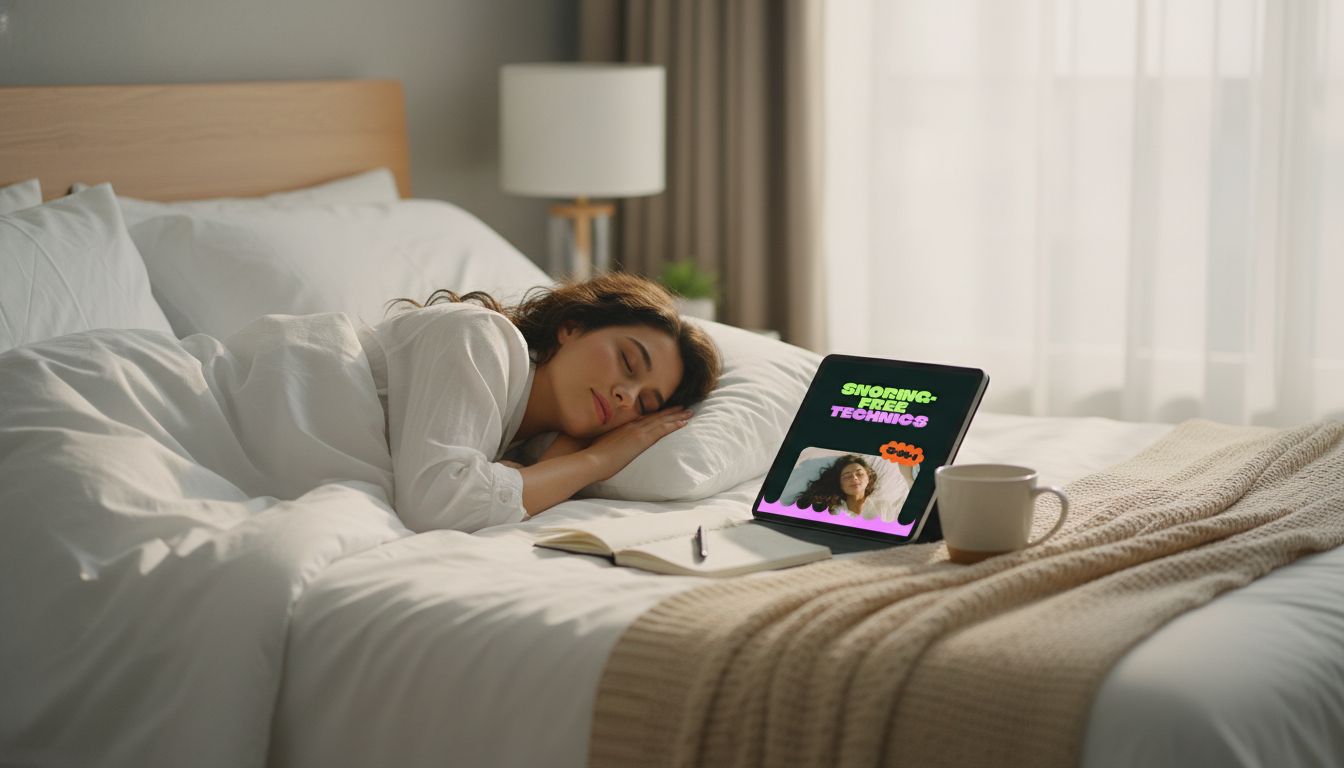
Snoring can come from several overlapping factors—sleep position, nasal congestion, relaxed throat tissues, or evening habits. A practical plan works best: identify the most likely triggers, apply targeted techniques, and track what changes the sound and sleep quality over 1–2 weeks. The Snoring-Free Technics for a Peaceful Night – 3-in-1 Digital Bundle to Prevent Snoring is built to organize that process into simple nightly steps, so you can stop guessing and start seeing patterns.
Snoring happens when airflow is partially blocked and soft tissues in the nose, mouth, or throat vibrate during sleep. That vibration can be mild and occasional—or loud enough to disrupt your sleep, your partner’s sleep, and your next day.
Common contributors include nasal congestion, back-sleeping, alcohol or sedatives near bedtime, weight changes, and inconsistent sleep routines. Often, more than one factor is present at the same time, which is why a structured “test and track” approach is usually more effective than a single quick fix.
Snoring can also be a sign of a more serious condition. Seek medical evaluation if there are pauses in breathing, choking/gasping, severe daytime sleepiness, morning headaches, high blood pressure, or loud snoring that persists despite changes—these can be signs of obstructive sleep apnea. For trustworthy overviews, see the American Academy of Sleep Medicine, the NHLBI (NIH), or Mayo Clinic’s snoring guide.
The first week works best as a clean experiment. Choose only two changes: one breathing/nasal step and one position/routine step. Keeping it simple makes it easier to identify what actually reduces snoring (instead of changing five things and not knowing which one mattered).
Set a consistent sleep window, with the same wake time daily when possible. Protect the final 60–90 minutes before bed: lighter meals, calmer lighting, and fewer stimulants. Then track three markers nightly: snoring volume (a partner rating or app), number of wake-ups, and morning energy.
| Night focus | What to do | How to measure |
|---|---|---|
| Nasal airflow | Warm shower or saline rinse; keep bedroom moderately humid; avoid heavy meals close to bed | Nasal comfort and reduced mouth breathing |
| Sleep position | Side-sleeping support (pillow behind back) and avoid back-sleeping | Partner/app notes fewer loud snore bursts |
| Throat tone | Brief pre-bed breathing or gentle mouth/throat exercises | Snoring intensity and morning dryness |
| Evening routine | Stop alcohol 3–4 hours before bed; limit sedatives unless prescribed; reduce late caffeine | Fewer awakenings and steadier sleep |
| Bedroom setup | Elevate head slightly; keep room cool and dark | Less congestion and improved sleep continuity |
| Review + adjust | Keep what helped; swap out what didn’t | Trend across nights 1–7 |
Snoring is usually easier to reduce when the approach matches the most likely source of the vibration. Think in four buckets—nasal airflow, sleep position, muscle tone, and evening habits—and start with the one that best matches what you notice.
If snoring comes with congestion, seasonal allergies, or waking with a dry mouth, nasal airflow is a good place to start. Simple practices (saline rinse, warm shower, keeping the bedroom humidity balanced, and reducing irritants) can lower resistance and reduce mouth breathing, which often makes snoring louder.
If snoring is mostly a back-sleeping problem, side sleeping plus gentle head elevation can make a noticeable difference quickly. Many people do well with a “pillow behind the back” strategy that makes rolling onto the back less likely during the night.
The Snoring-Free Technics for a Peaceful Night – 3-in-1 Digital Bundle to Prevent Snoring is designed as a structured toolkit: three digital components you can follow as a nightly routine and a weekly review. It’s most effective in a “one change at a time” format—implement a technique for 3–4 nights, log the result, then keep it or replace it.
| Bundle element | When to use | Goal |
|---|---|---|
| Step-by-step technique guide | Before bed (5–10 minutes) | Pick the right technique for the suspected trigger |
| Routine/checklist | Nightly + weekly review | Consistency and quick troubleshooting |
| Progress tracker | Daily entries (30–60 seconds) | See patterns and identify what actually works |
To keep the mood calmer, pair your snoring plan with a relaxing wind-down routine. If you want extra support for relaxation and bedtime mental “off-switching,” the Guided Imagery Toolkit for Sleep and Relaxation – 4-in-1 Bundle for Restful Nights can complement a snoring-focused routine by helping you settle more smoothly and stick with a consistent pre-sleep rhythm.
Some changes (side-sleeping, alcohol cutoff, nasal rinse) can help within a night or two. Muscle-tone exercises and routine stabilization often need 2–6 weeks of consistency, so tracking nightly and reviewing weekly tends to be the most useful.
Often, yes—especially for mild to moderate snoring—by combining position changes, nasal airflow support, and evening habit adjustments. Suspected sleep apnea should be assessed by a clinician and may require medical treatment or devices.
Seek evaluation if there are pauses in breathing, choking/gasping, loud snoring with excessive daytime sleepiness, morning headaches, high blood pressure, or witnessed apnea. A sleep study is a common next step to clarify what’s happening and guide treatment.







Leave a comment