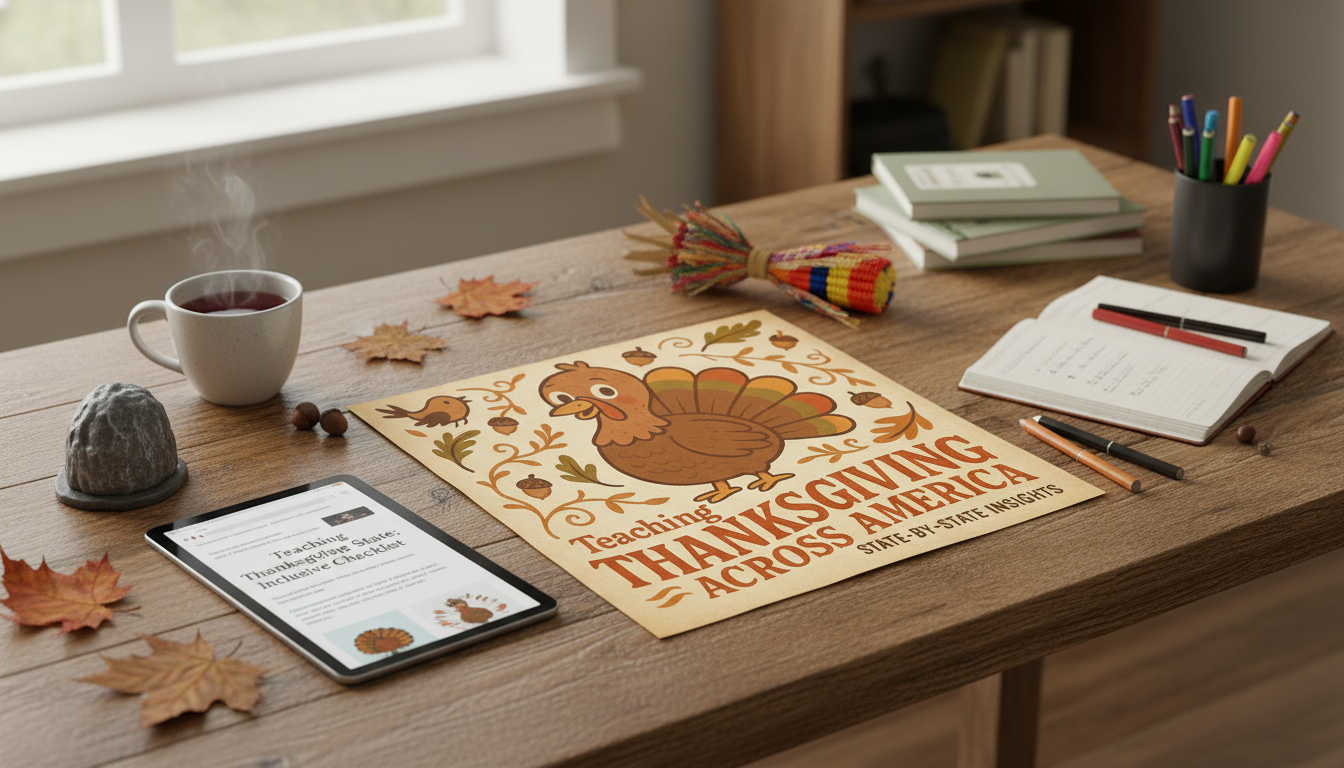
Thanksgiving is often taught as a single story, even though observances, local histories, and community traditions vary widely across the United States. A state-by-state lens helps students notice regional differences, connect local geography to historical change, and practice respectful discussion of complex topics. The approach below supports balanced instruction that includes multiple perspectives, primary sources, and age-appropriate context—while keeping lessons clear, organized, and classroom-ready. For more guidance, see Teaching Thanksgiving With Accuracy and Authenticity | Wisconsin ….
Clear learning goals help students move beyond memorizing a familiar narrative and toward doing real historical thinking. Consider goals that are measurable and adaptable across grade bands. For further reading, see Introducing A Treasured Thanksgiving | Treehouse Schoolhouse Blog.
For primary-source entry points, consider a short excerpt from the National Archives: Thanksgiving Proclamation (1789) to model how “official” language frames public memory.
A state-by-state routine keeps lessons consistent while leaving room for local specificity. Instead of trying to “cover everything,” repeat a small set of investigative steps for each location so students build confidence.
To help students recognize how popular stories can simplify complex history, a concise, classroom-friendly overview like Smithsonian Magazine — The True Story of Thanksgiving can support source-based discussion and careful wording.
Inclusive instruction doesn’t mean adding “extra” content; it means improving accuracy, precision, and the range of voices students learn to consider.
Educator-facing collections like Plimoth Patuxet Museums — Thanksgiving resources can help with careful terminology and contextual framing.
Planning ahead makes sensitive content easier to handle and reduces last-minute scrambling. A simple checklist also helps communicate to families what students are learning and why.
| Planning item | What “done” looks like | Notes |
|---|---|---|
| Local context identified | State/region map + local Indigenous nations named appropriately | Add pronunciation guide if needed |
| Sources selected | At least 1 primary source + 2 reputable references | Check reading level/length |
| Multiple perspectives included | At least 2 viewpoints represented with evidence | Avoid stereotypes/overgeneralizations |
| Activity sequence set | Warm-up, mini-lesson, source work, reflection, share-out | Time estimates per day |
| Assessment prepared | Rubric + clear success criteria for students | Allow choice of product |
If you want a single, organized resource to keep planning consistent, Teaching Thanksgiving Across America: State-by-State Insights (digital download) is designed to streamline your routines—especially when you’re balancing multiple perspectives, standards, and limited time.
For classrooms that benefit from explicit culture-building around respectful discourse and reflection, a companion resource like the Positive Attitude Starter Pack | 3-in-1 Digital Bundle can support discussion norms, goal-setting, and a calmer tone during complex conversations.
Yes. Keep the same routines (map check, guiding questions, source snapshot), but adjust vocabulary, reading level, and depth of analysis; younger students can focus on comparing traditions, while older students evaluate claims and debate how public memory is shaped.
Use accurate terminology, include more than one perspective with evidence, and set clear norms for respectful discussion. Keep the framing age-appropriate while still acknowledging conflict, displacement, and power dynamics without relying on stereotypes.
It typically includes a state-by-state framework to guide what to notice in each location, plus a printable or fillable planning checklist to keep sources, perspectives, lesson steps, and assessment expectations organized in one place.






Leave a comment