Thanksgiving lessons can honor tradition while also reflecting the lived history and continuing presence of the Wampanoag people. A well-designed classroom approach helps students separate popular myths from documented events, understand Indigenous culture beyond a single holiday, and practice respectful language when discussing the 1621 gathering and its long aftermath.
The Wampanoag are a sovereign Native nation with deep roots in what is now southeastern Massachusetts and eastern Rhode Island. Centering them isn’t an “extra perspective”—it’s historically necessary for understanding what happened in the 1600s and why Thanksgiving became such a powerful national story.
It also helps students see the 1621 harvest gathering as one moment in a much larger timeline of diplomacy, survival, and change, rather than a simplified “friendly dinner” that stands alone. When lessons stop at 1621, students miss the realities of colonial expansion and the long-term consequences for Native nations.
Equally important: Wampanoag culture is not trapped in the past. Communities continue today through governance, traditions, and ongoing efforts such as language revitalization. Classroom language should reflect that continuity—avoiding “were” and “used to” framing when describing living people and nations.
When possible, guide students toward nation-specific terms and names, such as Wampanoag and Pokanoket, and teach key individuals with care—like Massasoit Ousamequin—without turning complex relationships into simple heroes and villains.
A timeline gives students structure without forcing a single script. It also opens space for better questions: What changed over time? Who held power in different moments? What did diplomacy look like when survival and uncertainty shaped every decision?
| Time period | What students can learn | Respectful teaching note |
|---|---|---|
| Before 1600 | Wampanoag governance, land stewardship, seasonal foodways, community responsibilities | Avoid implying Indigenous history began at European arrival |
| Early 1600s | Disease and upheaval in the region; changing alliances and pressures | Handle sensitively; focus on human impact, not statistics alone |
| 1620 | English settlement at Patuxet/Plymouth and early survival struggles | Name the place and acknowledge prior Wampanoag presence |
| 1621 | Diplomacy and the harvest gathering; different goals and perspectives | Avoid costumes/role-play that caricatures Native people |
| After 1621 | Expansion, conflict, and long-term consequences for Native nations | Connect the holiday narrative to broader history responsibly |
To support accuracy, introduce the pre-1620 context: established Wampanoag communities, seasonal lifeways, trade networks, and diplomacy among neighboring nations. Then explain how epidemics in the early 1600s reshaped communities and power dynamics—an essential piece of understanding why decisions in 1620–1621 were so high-stakes.
When discussing the English arrival at Patuxet (later Plymouth), emphasize the meaning of place: who lived there, what had changed, and why naming the location matters. Finally, place individuals like Ousamequin (Massasoit), Tisquantum, and Samoset in context—highlighting translation, negotiation, and unequal power rather than portraying any one person as a magical “bridge” between worlds.
Students often encounter Wampanoag history only in November. A stronger approach builds cultural understanding across multiple dimensions—food systems, community responsibilities, language, and place-based knowledge—without reducing them to “fun facts.”
For foodways, connect seasonal cycles to real decision-making: fishing runs, planting, harvesting, hunting, and preservation. Discuss the “Three Sisters” (corn, beans, squash) as an agricultural knowledge system tied to ecology, labor, and community planning.
For governance and community, focus on how leaders worked within responsibilities to families and villages, and how diplomacy required careful choices—especially in times of upheaval. When describing homes, clothing, and technology, use specific sources and avoid pan-Indigenous generalizations that erase differences among Native nations.
Language and storytelling can be taught as living traditions. When age-appropriate, mention ongoing revitalization efforts to reinforce that Wampanoag people are present today—not a historical footnote.
Moving from myth to evidence doesn’t mean removing gratitude or reflection; it means teaching students to ask stronger questions and respect real people.
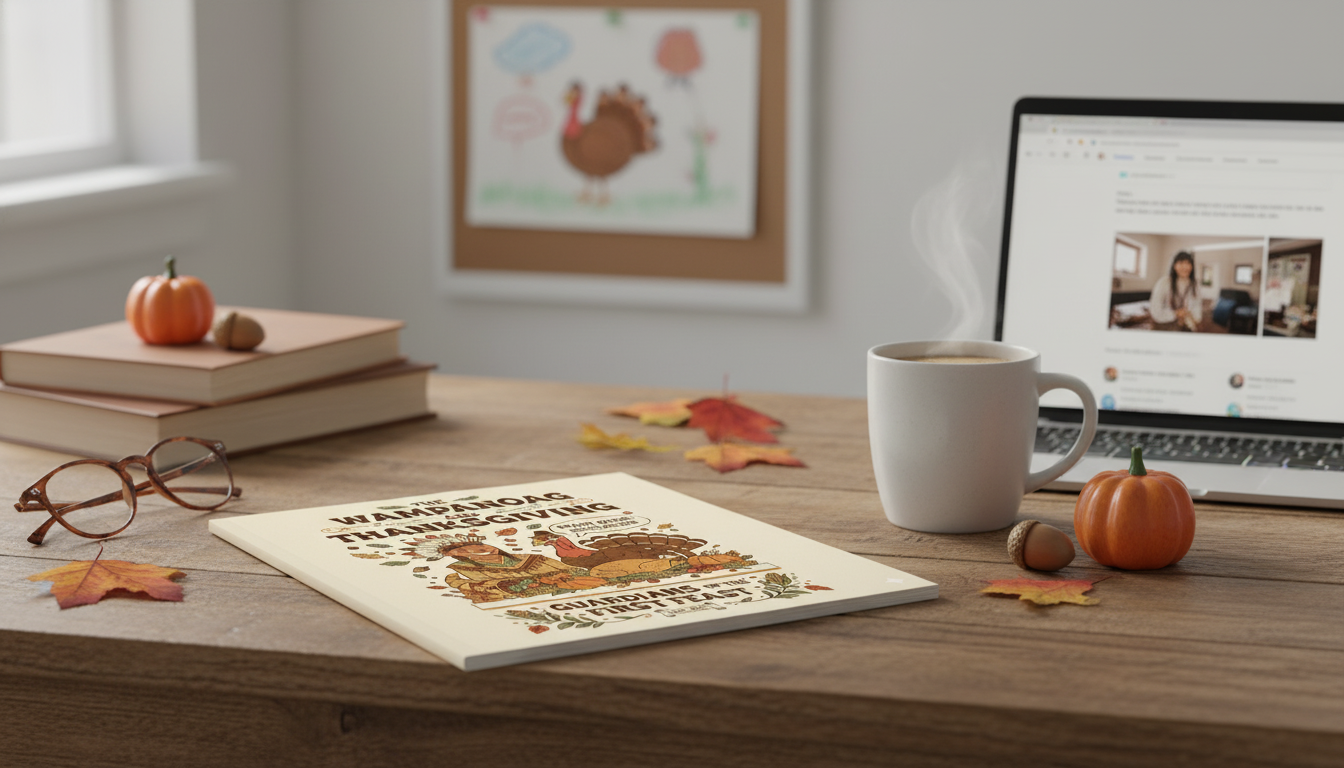
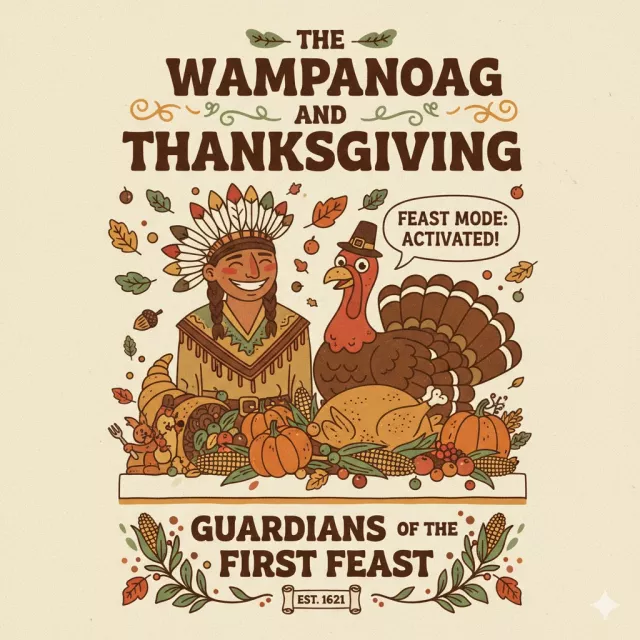
For educators and families who want a ready-to-use option, The Wampanoag and Thanksgiving: Guardians of the First Feast (digital download) is designed as an educational eBook focused on Wampanoag history, Indigenous culture, and the origins of Thanksgiving. Its guided structure supports students in moving beyond a single celebratory narrative toward a fuller understanding of people, place, and historical change.
For a complementary, general-purpose option that can support classroom reflection routines during the season, the Positive Attitude Starter Pack (digital bundle) can be used for short gratitude and goal-setting writing prompts alongside more rigorous history lessons.
| Format | Best for | Theme focus | Access |
|---|---|---|---|
| Digital download eBook | Teachers, parents, students | Wampanoag history, Indigenous culture, Thanksgiving origins | Immediate use after purchase (download) |
When building lessons, stick to sources that prioritize Indigenous perspectives and strong historical interpretation, such as Plimoth Patuxet Museums, the National Museum of the American Indian, and background reading that helps challenge misconceptions like those often addressed by Smithsonian Magazine.
Yes, when lessons use accurate history, respectful language, and attention to Indigenous perspectives. It also helps to include what happened after 1621 rather than stopping at a celebratory ending.
Avoid costumes, generic “Native crafts,” invented names, and simplified scripts that flatten real cultures. Choose evidence-based readings, timelines, maps, primary sources, and reflection prompts instead.
Use nation-specific terms like Wampanoag, read age-appropriate resources together, and connect gratitude to truthful history. Emphasize that Indigenous communities are living communities today.
Thanksgiving lessons can honor tradition while also reflecting the lived history and continuing presence of the Wampanoag people. A well-designed classroom approach helps students separate popular myths from documented events, understand Indigenous culture beyond a single holiday, and practice respectful language when discussing the 1621 gathering and its long aftermath.
The Wampanoag are a sovereign Native nation with deep roots in what is now southeastern Massachusetts and eastern Rhode Island. Centering them isn’t an “extra perspective”—it’s historically necessary for understanding what happened in the 1600s and why Thanksgiving became such a powerful national story.
It also helps students see the 1621 harvest gathering as one moment in a much larger timeline of diplomacy, survival, and change, rather than a simplified “friendly dinner” that stands alone. When lessons stop at 1621, students miss the realities of colonial expansion and the long-term consequences for Native nations.
Equally important: Wampanoag culture is not trapped in the past. Communities continue today through governance, traditions, and ongoing efforts such as language revitalization. Classroom language should reflect that continuity—avoiding “were” and “used to” framing when describing living people and nations.
When possible, guide students toward nation-specific terms and names, such as Wampanoag and Pokanoket, and teach key individuals with care—like Massasoit Ousamequin—without turning complex relationships into simple heroes and villains.
A timeline gives students structure without forcing a single script. It also opens space for better questions: What changed over time? Who held power in different moments? What did diplomacy look like when survival and uncertainty shaped every decision?
| Time period | What students can learn | Respectful teaching note |
|---|---|---|
| Before 1600 | Wampanoag governance, land stewardship, seasonal foodways, community responsibilities | Avoid implying Indigenous history began at European arrival |
| Early 1600s | Disease and upheaval in the region; changing alliances and pressures | Handle sensitively; focus on human impact, not statistics alone |
| 1620 | English settlement at Patuxet/Plymouth and early survival struggles | Name the place and acknowledge prior Wampanoag presence |
| 1621 | Diplomacy and the harvest gathering; different goals and perspectives | Avoid costumes/role-play that caricatures Native people |
| After 1621 | Expansion, conflict, and long-term consequences for Native nations | Connect the holiday narrative to broader history responsibly |
To support accuracy, introduce the pre-1620 context: established Wampanoag communities, seasonal lifeways, trade networks, and diplomacy among neighboring nations. Then explain how epidemics in the early 1600s reshaped communities and power dynamics—an essential piece of understanding why decisions in 1620–1621 were so high-stakes.
When discussing the English arrival at Patuxet (later Plymouth), emphasize the meaning of place: who lived there, what had changed, and why naming the location matters. Finally, place individuals like Ousamequin (Massasoit), Tisquantum, and Samoset in context—highlighting translation, negotiation, and unequal power rather than portraying any one person as a magical “bridge” between worlds.
Students often encounter Wampanoag history only in November. A stronger approach builds cultural understanding across multiple dimensions—food systems, community responsibilities, language, and place-based knowledge—without reducing them to “fun facts.”
For foodways, connect seasonal cycles to real decision-making: fishing runs, planting, harvesting, hunting, and preservation. Discuss the “Three Sisters” (corn, beans, squash) as an agricultural knowledge system tied to ecology, labor, and community planning.
For governance and community, focus on how leaders worked within responsibilities to families and villages, and how diplomacy required careful choices—especially in times of upheaval. When describing homes, clothing, and technology, use specific sources and avoid pan-Indigenous generalizations that erase differences among Native nations.
Language and storytelling can be taught as living traditions. When age-appropriate, mention ongoing revitalization efforts to reinforce that Wampanoag people are present today—not a historical footnote.
Moving from myth to evidence doesn’t mean removing gratitude or reflection; it means teaching students to ask stronger questions and respect real people.
For educators and families who want a ready-to-use option, The Wampanoag and Thanksgiving: Guardians of the First Feast (digital download) is designed as an educational eBook focused on Wampanoag history, Indigenous culture, and the origins of Thanksgiving. Its guided structure supports students in moving beyond a single celebratory narrative toward a fuller understanding of people, place, and historical change.
For a complementary, general-purpose option that can support classroom reflection routines during the season, the Positive Attitude Starter Pack (digital bundle) can be used for short gratitude and goal-setting writing prompts alongside more rigorous history lessons.
| Format | Best for | Theme focus | Access |
|---|---|---|---|
| Digital download eBook | Teachers, parents, students | Wampanoag history, Indigenous culture, Thanksgiving origins | Immediate use after purchase (download) |
When building lessons, stick to sources that prioritize Indigenous perspectives and strong historical interpretation, such as Plimoth Patuxet Museums, the National Museum of the American Indian, and background reading that helps challenge misconceptions like those often addressed by Smithsonian Magazine.
Yes, when lessons use accurate history, respectful language, and attention to Indigenous perspectives. It also helps to include what happened after 1621 rather than stopping at a celebratory ending.
Avoid costumes, generic “Native crafts,” invented names, and simplified scripts that flatten real cultures. Choose evidence-based readings, timelines, maps, primary sources, and reflection prompts instead.
Use nation-specific terms like Wampanoag, read age-appropriate resources together, and connect gratitude to truthful history. Emphasize that Indigenous communities are living communities today.






Leave a comment