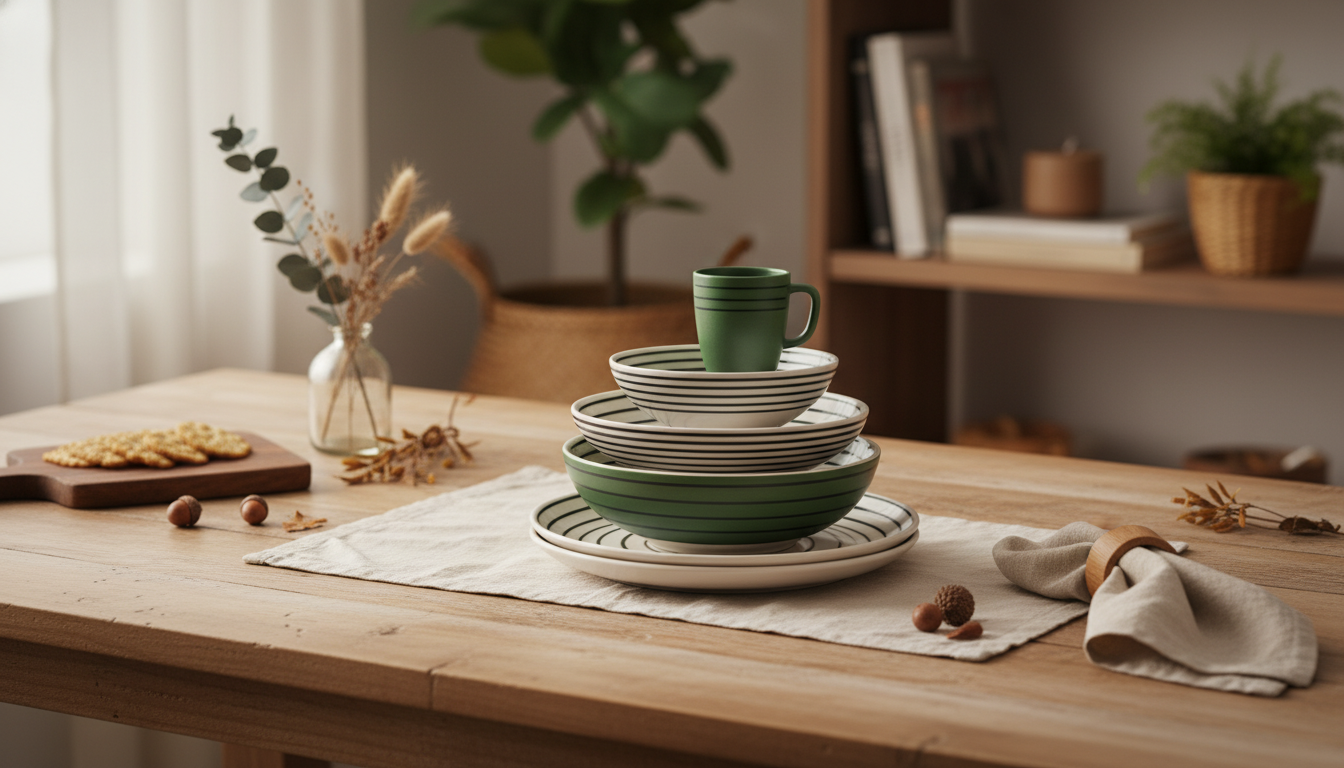
Warm neutrals create a calm, welcoming table that works across seasons—casual brunches, weeknight dinners, and holidays alike. Earthy styling is less about “decorating” and more about choosing a few grounded materials (linen, stoneware, wood) and repeating them with intention. With a simple system, a cohesive tablescape comes together quickly—without overthinking every detail or buying an entire new set of dishes.
Earthy simple elegance has a quiet confidence. Instead of bold contrast and lots of shine, it leans into soft depth, touchable textures, and clean shapes that feel curated but not precious.
If you want a quick reference for traditional place setting order (especially when you’re adding courses), Emily Post’s table setting basics are a helpful standard to keep in your back pocket.
Emily Post Institute — Table Setting Basics
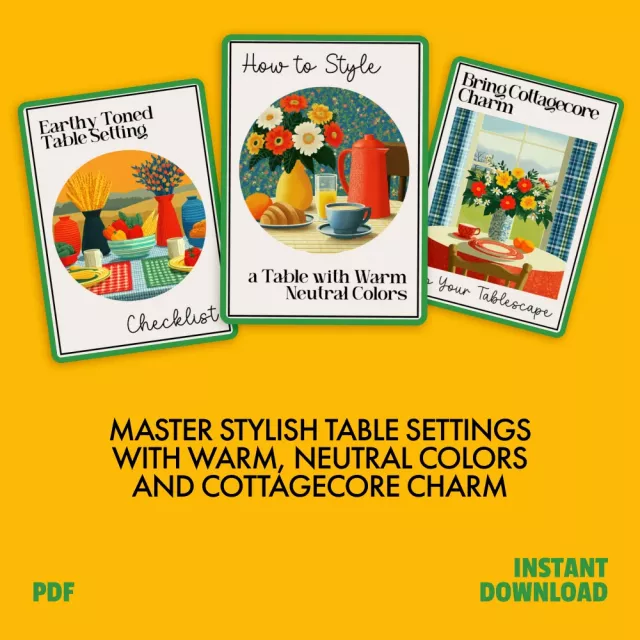
A warm-neutral look is easiest when you’re not making ten decisions at once. The Earthy Table Bundle for Simple Elegance: 3-in-1 Guide Set for Warm, Neutral Toned Tablescapes is built to turn “I want that calm, earthy vibe” into clear steps you can repeat for different tables, seasons, and guest counts.
| Guide piece | Best for | Result on the table |
|---|---|---|
| Core styling guide | Planning the overall look | A cohesive palette and consistent materials |
| Tablescape layouts | Sizing and placement decisions | Better spacing, fewer “crowded” areas |
| Finishing touches + checklist | Final pass before guests arrive | Polished details without extra clutter |
When a tablescape feels “effortless,” it’s usually because the layers were built in a logical order. Use this formula to keep decisions simple and repeatable.
Start with a natural foundation: a wood tabletop, a neutral tablecloth, or a runner. If your table is visually busy (strong grain or dark finish), a warm ivory runner can instantly soften the whole scene.
Choose one main plate color—cream or matte white is the easiest—and repeat it for continuity. If you mix plates, keep the shape consistent (all coupe, all rimmed, etc.) so the look stays clean even with varied tones.
Add linen napkins in sand, oatmeal, or warm gray. Pick a fold that matches the vibe: a casual roll for everyday, a classic rectangle for dinner, or a relaxed knot for brunch. Repetition is the “secret sauce” here—same fold at every setting reads elevated immediately.
Keep the centerpiece low: bud vases, taper candles, or a shallow bowl with dried stems. For long tables, create two or three small clusters instead of one large arrangement so sightlines stay open.
Use glass and metal sparingly. One small “highlight” material is enough—amber glass, brushed brass, or clear crystal—repeated once or twice so it looks intentional rather than random.
Warm neutrals can drift into “all the same beige” if there’s no structure. A reliable approach is two lights + one medium, then one anchor tone for depth. Keep patterns subtle and treat greenery as its own neutral.
| Base neutral | Secondary neutral | Anchor tone | Accent idea |
|---|---|---|---|
| Cream | Oatmeal | Espresso brown | Amber glass |
| Warm white | Taupe | Terracotta | Dried pampas |
| Sand | Warm gray | Charcoal | Brushed brass |
| Ivory | Camel | Olive green | Natural wood |
For additional visuals and foundational pointers (especially if you’re coordinating multiple utensils and glasses), The Spruce offers a practical overview of table setting ideas and basics.
The Spruce — Table Setting Ideas and Basics
Earthy styling is at its best when it flexes—same palette family, different density of details depending on the moment.
Use contrast and texture: pair light neutrals with one darker anchor tone, layer linen with stoneware or wood, and repeat one “highlight” material like amber glass or brushed brass.
Keep it low and textural—small bud vases, dried stems, olive branches, or a shallow bowl with natural elements; add candles for height without blocking sightlines.
Aim for 3–4 total: two light neutrals, one medium neutral, and one anchor tone. Accents should be small, subtle, and repeated so they read intentional.






Leave a comment